Account
New to ADSS? Open an
account now to get started.
Already have an account?
Add funds to your ADSS account
Account
New to ADSS? Open an
account now to get started.
Add funds to your ADSS account


The travel sector, a subsector of consumer discretionary, includes companies that facilitate tourism. They may provide transportation, accommodation, or leisure services to consumers travelling for business or pleasure.

Global tourism, after near-uninterrupted growth throughout the twentieth and early twenty-first centuries, is still recovering from two major shocks. First, the global financial crisis in 2008 severely limited disposable income in many developed markets, leading to the failure of many European and American tour operators. Then, even more severe in its impact on travel stocks, the sector experienced a total shutdown during the 2020 pandemic and subsequent lockdowns. During this period many tourism companies failed, and others took on unhealthy debt burdens to survive. After the removal of restrictions, the leisure tourism sector rapidly rebounded, while business travel remained depressed, thanks in part to a growth in remote work. This uneven recovery affects different travel companies differently, with cruise lines and resort operators benefiting from pent-up demand, while business-oriented airlines and hotel chains face prolonged revenue challenges. The sector faces structural challenges from permanent capacity losses, as numerous airlines, hotels, and travel companies failed during the pandemic or permanently reduced operations, creating supply constraints and the closure of popular air routes or leisure venues. For the survivors, there are some benefits from the new absence of competition, but it will take years to rebuild visitor numbers to pre-pandemic levels. Elsewhere, ongoing technological trends include the now well-established movement of bookings and advertising from bricks and mortar to online stores, with major travel stocks like Airbnb straddling the tech and tourism sectors.

Fund
Fund using Mastercard, VISA, UAEPGS (for UAE bank accounts holders only)

Invest
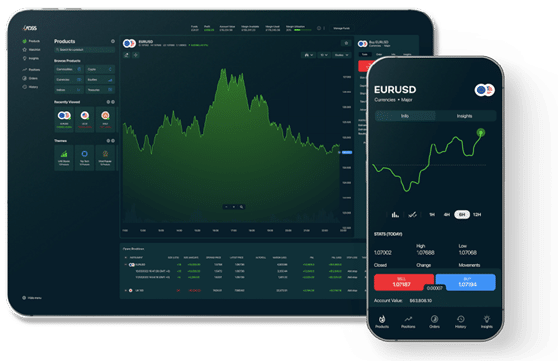
Invest in travel stocks through the ADSS platform
Travel companies are cyclical and so face challenges during economic downturns. When disposable income falls, consumers typically reduce discretionary spending on holidays and business travel. Unlike essential purchases of consumer staples, holidays can be delayed or cancelled when household budgets tighten, and mass-market tourism (as opposed to the luxury sector) relies on a middle-income customer base. This sensitivity affects various travel segments differently: airline stocks and cruise line stocks often experience sharp declines due to their high fixed costs and fuel price exposure, while some hospitality stocks may prove more resilient. The cyclical nature of travel industry stocks means they often demonstrate higher volatility than defensive sectors, but this also creates opportunities for substantial returns during periods of economic growth, when leisure stocks and tourism stocks typically outperform the broader market.
Travel stocks include several distinct subsectors, each with their own investment characteristics and risk profiles. Hotel stocks include budget accommodation and luxury resort chains, with business models varying from asset-heavy property ownership to rented management contracts. Cruise line stocks are investments in capital-intensive businesses with high barriers to entry, but potentially strong margins and dividend yields. Online booking platforms and travel technology companies operate low-cost, low-margin models with different risk profiles compared to traditional travel companies. Some aviation stocks are also included amongst travel company stocks, particularly those that run booking companies and hotels under the same brand.
Strong long-term investment opportunities typically combine strong brand recognition, multiple revenue streams, and adaptability to changing consumer preferences. All of these are characteristics change over time, and it requires research and an understanding of the overall market to identify them. Some travel companies are reliable dividend payers, whilst others offer growth opportunities during periods of economic expansion. All share certain characteristics, particularly in terms of the still-ongoing recovery from the shutdown of global travel in 2020-2021. Investors should pay close attention to debt levels when evaluating leisure and tourism stocks.

ADSS
8th floor, CI Tower
Corniche Road
PO Box 93894
Abu Dhabi
United Arab Emirates
Trading Services
ts@adss.com
+971 2 657 2414
Investing in CFDs involves a high degree of risk that you will lose your money due to the use of leverage, particularly in fast moving markets, where a relatively small movement in the price can lead to a proportionately larger movement in the value of your investment. This can result in loses that exceed the funds in your account. You should consider whether you understand how CFDs work and you should seek independent advice if necessary.
ADS Securities L.L.C – S.P.C (“ADSS”), a limited liability company – sole proprietorship company incorporated under United Arab Emirates law. Registered under Commercial License No.1190047. ADS Securities L.L.C S.P.C is regulated and authorised in the UAE by the Capital Market Authority (CMA) under Category 1 License No.305027 (Trading Broker, Trading and Clearing Broker, Trading Broker in the International Markets, Trading Broker of OTC Derivatives and Currencies in the Spot Market, Financial Products Dealer) and Category 5 License No.20200000217 (Introduction). Registered Office: 8th Floor, CI Tower, Corniche Road, P.O. Box 93894, Abu Dhabi, United Arab Emirates.
The information presented is not directed at residents of any particular country outside the United Arab Emirates and is not intended for distribution to, or use by, any person in any country where the distribution or use is contrary to local law or regulation.
ADSS is an execution only service provider and does not provide advice. ADSS may publish general market commentary from time to time. Where it does, the material published does not constitute advice, or a solicitation, or a recommendation to a transaction in any financial instrument. ADSS accepts no responsibility for any use of the content presented and any consequences of that use. No representation or warranty is given as to the completeness of this information. Anyone acting on the information provided does so at their own risk.