Account
New to ADSS? Open an
account now to get started.
Already have an account?
Add funds to your ADSS account
Account
New to ADSS? Open an
account now to get started.
Add funds to your ADSS account


Energy companies explore, produce, distribute, and trade energy resources. Oil and its refined products are the best-known energy commodities, but gas and coal are also significant. Amongst the non-fossil fuel market, nuclear power and renewable energy are smaller but highly important energy sources.
With ADSS, investors can access and invest in renewable energy stocks with zero commission.


Oil and Gas sector includes companies involved in the discovery, extraction, and refining of oil and gas products.

Renewable energy stocks include companies who produce and distribute power from sustainable sources.

Nuclear power includes companies operating across three broad areas: power plant operators, uranium miners and R&D-focused nuclear technology firms.
Pricing from TradingView is indicative and does not represent ADSS pricing.
The growth of renewable energy sources is known as the energy transition, and this trend is projected to continue, both as a policy choice and organically through improvements in renewable energy technology. The push toward decarbonisation is reshaping investment patterns, with traditional oil and gas majors reallocating capital toward renewable projects, hydrogen infrastructure, and carbon capture technologies. This pivot reflects both regulatory pressure and changing investor preferences, with sustainability considerations influencing capital allocation decisions and state regulators heavily promoting renewable energy.
Global energy markets are sensitive to geopolitical events, supply constraints, and demand fluctuations. Regional conflicts, production agreements among major producers, and strategic petroleum reserve policies continue to create volatility in fossil fuel markets. Some major oil producing nations are politically unstable, and this can cause sudden supply shocks that impact the global market. Meanwhile, renewable energy costs are decreasing, improving competitiveness against conventional energy sources, a trend supported in many markets by significant subsidies.
Other significant trends include electrification of transport and industrial businesses; battery technology, a critical factor in the adoption of renewable energy, increasing demand for critical minerals essential for clean energy infrastructure; and grid stability. Traditional energy companies are diversifying their portfolios, forming strategic partnerships with technology providers, and reconfiguring business models. Many of the factors influencing the energy transition are policy choices and so can change in an arbitrary fashion, giving an element of political risk to energy stocks, in both the renewable and fossil fuel subsectors.

Fund
Fund using Mastercard, VISA, UAEPGS (for UAE bank accounts holders only)

Invest
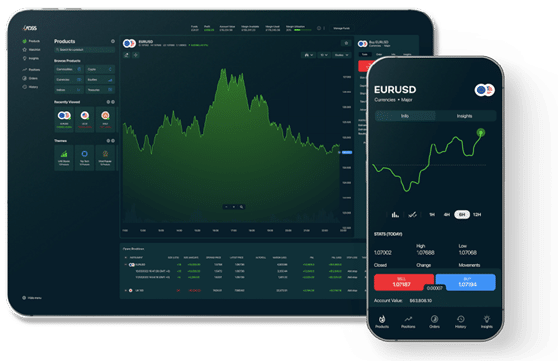
Invest in energy stocks through the ADSS platform
Crude oil prices directly impact the profitability of energy companies, particularly those involved in exploration, production, and refining. When oil prices rise, upstream companies typically see increased revenue and profit margins, while downstream operations may face higher input costs. Integrated energy majors can often benefit from high oil prices through their exploration and production divisions. However, sustained low crude oil prices can lead to reduced capital expenditure, project delays, and potentially dividend cuts across the energy sector. Investors should monitor OPEC+ decisions, global supply-demand dynamics, and strategic petroleum reserve policies as key factors influencing crude oil prices and, consequently, energy stock performance.
The energy transition has created significant opportunities in renewable energy stocks. Companies leading in solar, wind, hydroelectric, and battery storage technologies have shown strong growth potential. Top performers often include utilities pivoting toward clean energy, pure-play renewable developers with established project pipelines, and technology providers enabling grid integration. When evaluating renewable energy stocks, consider factors such as government policy support, project backlog, technological advantages, and balance sheet strength. Many traditional energy companies are also allocating substantial capital toward renewable projects, offering investors exposure to both conventional and clean energy through a single stock.
The ongoing energy transition presents both challenges and opportunities for traditional oil and gas stocks. Many established energy companies are diversifying their portfolios by investing in renewable energy projects, hydrogen infrastructure, and carbon capture technologies. This strategic shift reflects changing regulatory environments and investor preferences focused on sustainability. Companies demonstrating credible transition strategies while maintaining profitable conventional operations have often outperformed peers. However, the transition also introduces uncertainty regarding long-term demand for fossil fuels, potential stranded assets, and capital allocation decisions. Investors should evaluate oil and gas stocks based on their adaptation strategies, renewable energy commitments, and ability to generate cash flow throughout the transition period.
Energy infrastructure assets provide essential services for both traditional and renewable energy sectors. These companies typically generate stable cash flows through long-term contracts regardless of commodity price fluctuations, making them attractive for income-focused investors. Energy infrastructure and grid management is more complicated for renewables, with storage requirements and the necessity of managing irregular power generation. Infrastructure companies often operate on a toll-road business model, where clients pay for access to their network and material This model offers stable, inflation-adjusted returns.
Utility stocks can serve as defensive investments during periods of volatile crude oil prices due to their regulated business models and stable dividend yields. While utilities face some exposure to fuel costs, particularly those operating natural gas or coal plants, regulated utilities can often pass these costs through to consumers. Additionally, utilities with significant renewable energy generation capacity may benefit from their reduced exposure to fossil fuel price fluctuations. During inflationary periods often associated with high crude oil prices, utilities with inflation-adjusted rate structures and strong balance sheets typically outperform. However, rising interest rates that sometimes accompany high oil prices can pressure utility valuations due to their capital-intensive nature and competition with fixed-income investments.

ADSS
8th floor, CI Tower
Corniche Road
PO Box 93894
Abu Dhabi
United Arab Emirates
Trading Services
ts@adss.com
+971 2 657 2414
Investing in CFDs involves a high degree of risk that you will lose your money due to the use of leverage, particularly in fast moving markets, where a relatively small movement in the price can lead to a proportionately larger movement in the value of your investment. This can result in loses that exceed the funds in your account. You should consider whether you understand how CFDs work and you should seek independent advice if necessary.
ADS Securities L.L.C – S.P.C (“ADSS”), a limited liability company – sole proprietorship company incorporated under United Arab Emirates law. Registered under Commercial License No.1190047. ADS Securities L.L.C S.P.C is regulated and authorised in the UAE by the Capital Market Authority (CMA) under Category 1 License No.305027 (Trading Broker, Trading and Clearing Broker, Trading Broker in the International Markets, Trading Broker of OTC Derivatives and Currencies in the Spot Market, Financial Products Dealer) and Category 5 License No.20200000217 (Introduction). Registered Office: 8th Floor, CI Tower, Corniche Road, P.O. Box 93894, Abu Dhabi, United Arab Emirates.
The information presented is not directed at residents of any particular country outside the United Arab Emirates and is not intended for distribution to, or use by, any person in any country where the distribution or use is contrary to local law or regulation.
ADSS is an execution only service provider and does not provide advice. ADSS may publish general market commentary from time to time. Where it does, the material published does not constitute advice, or a solicitation, or a recommendation to a transaction in any financial instrument. ADSS accepts no responsibility for any use of the content presented and any consequences of that use. No representation or warranty is given as to the completeness of this information. Anyone acting on the information provided does so at their own risk.