Account
New to ADSS? Open an
account now to get started.
Already have an account?
Add funds to your ADSS account
Account
New to ADSS? Open an
account now to get started.
Add funds to your ADSS account


Learn
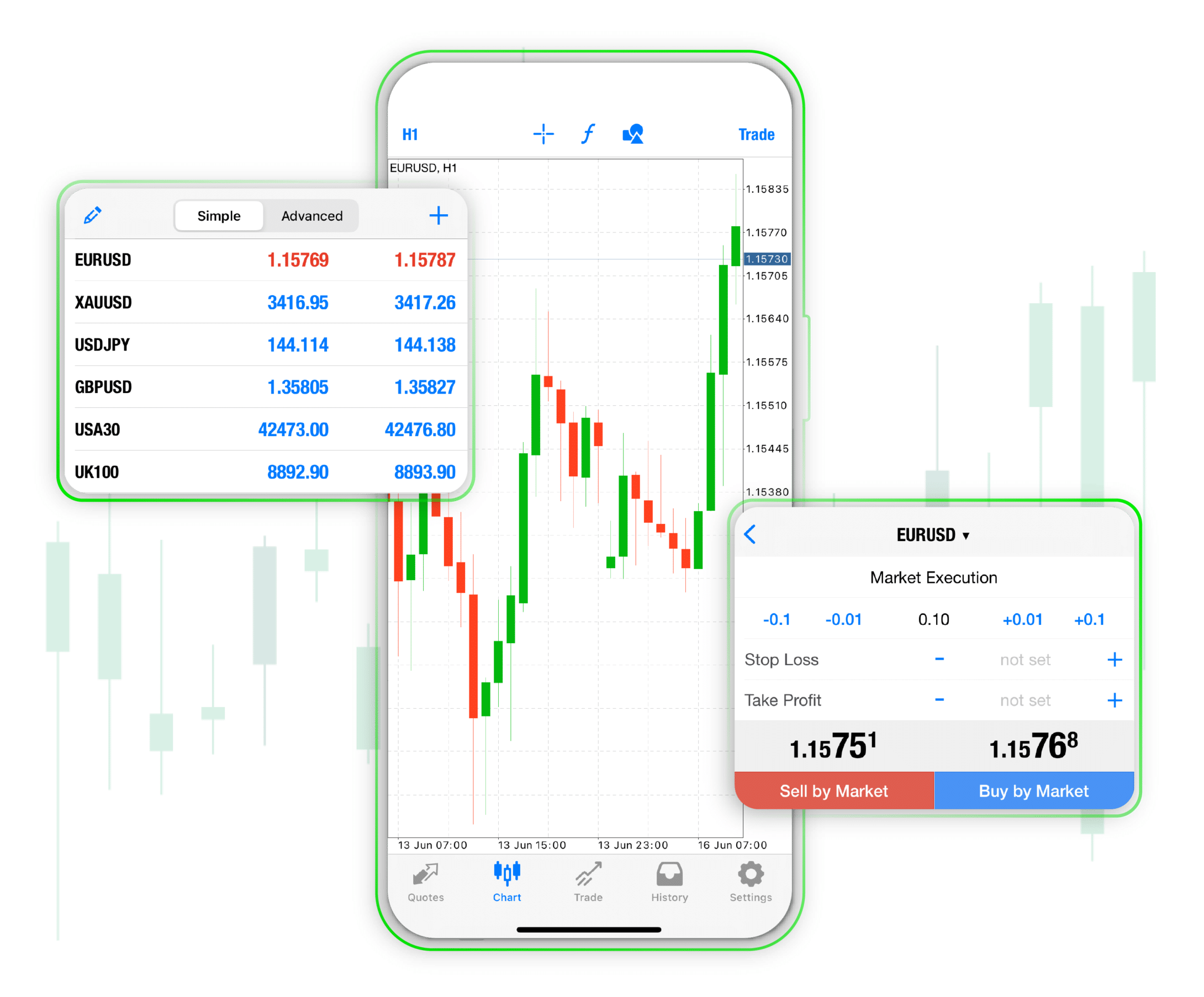
When choosing a trading platform, it helps to understand the key differences between MetaTrader 4 and MetaTrader 5. Traders can use both platforms effectively, but each offers distinct advantages depending on your trading style and personal requirements.
First launched in 2005, MetaTrader 4 remains the world’s most popular and widely used online trading platform. Often called the gold standard for CFD trading, it enables millions of traders to access global stock, commodity, and currency markets.
Best known for transforming forex CFD trading, MT4 is a multi-asset trading platform offering institutional-grade tools to retail clients. It quickly became the leading retail platform thanks to its intuitive design and powerful charting features, allowing ADSS traders to access all supported products in one place.
The platform supports both manual trading and automated strategies through the Expert Advisor (EA) system, making it adaptable to any trading style or approach and benefiting from proven stability through decades of market volatility.
MetaTrader 5 is not a rebuild of MT4, but an entirely new platform designed to offer more charting tools, additional timeframes and easier integration with third-party plugins. Released in 2010, MT5 trading software supports trading across forex, stocks, commodities, and other instruments, with advanced analytics and automated trading via Expert Advisors.
MT5 offers a comprehensive upgrade to MT4, written in the new MQL5 (MetaQuotes Language) programming language – a significant development from MT4’s MQL4. Like MT4, MT5 is usable by traders off all experience levels and specialisations, but is more focused on the needs of traders using algorithms or trading in more exotic markets.
The most significant difference between MT4 and MT5 lies in market access. MT4 primarily focuses on forex CFD trading, though it provides full integration with all other asset class offerings including stocks, commodities, and indices. This makes it particularly well-suited for traders who concentrate on currency markets but occasionally venture into other asset classes; the chart types and features available reflect the needs of this core market.
MT5, by contrast, is a purpose-built multi-asset trading platform offering full integration across all asset classes. This includes CFDs on forex, commodities, bonds, stocks, ETFs, and more. The platform was specifically designed for traders requiring diverse market access within a single interface and reflects changes in client behaviour since the launch of MT4.
MT4 operates with standard order types, including market orders, pending orders, and stop orders. The platform utilises a single hedging and netting account system and has built its reputation on proven execution reliability.
MT5, on the other hand, introduced advanced order options that reflect the evolution of trading requirements since 2005. These include Fill-or-Kill orders that execute immediately or cancel entirely, and Immediate-or-Cancel orders for precise execution control. The platform supports both netting and hedging of open positions, providing greater flexibility in position management. Certain MT5 features, such as depth of market (a feature showing the capacity of a market to absorb large orders), are significant improvements, but of limited importance to CFD traders.
Both platforms offer tools for technical analysis, though MT5 has somewhat expanded capabilities. MT4 provides nine timeframes, 31 graphical objects, and 30 technical indicators – a comprehensive toolkit that has served traders effectively for nearly two decades. These proven charting tools remain suitable for most trading strategies and continue to satisfy the requirements of both manual traders and automated systems.
MT5 extends these capabilities considerably, offering 21 timeframes for greater analytical flexibility. The platform includes 44 graphical objects and 38 technical indicators, along with additional chart types including Renko and Range bars. This expanded toolkit provides superior customisation options for traders who require detailed technical analysis across multiple timeframes and chart styles.
MT4 and MT5 differ in their programming foundations. MT4 uses the MQL4, which benefits from a large community of developers creating Expert Advisors and custom indicators. The extensive library of existing automated strategies and the simpler programming structure make MT4 particularly accessible for traders beginning to explore automated trading.
MT5 uses MQL5, offering object-oriented programming and more advanced algorithmic trading capabilities. This enables more sophisticated algorithmic trading capabilities and enhanced automated trading features. For traders serious about developing complex automated strategies, MQL5 provides significantly more powerful tools, though it requires greater programming expertise to use.
MT5 extends these capabilities considerably, offering 21 timeframes for greater analytical flexibility. The platform includes 44 graphical objects and 38 technical indicators, along with additional chart types including Renko and Range bars. This expanded toolkit provides superior customisation options for traders who require detailed technical analysis across multiple timeframes and chart styles.
Choosing between MT4 and MT5 depends on your experience and trading goals.
Both MetaTrader 4 and MetaTrader 5 offer top-of-the-range trading capabilities and can be integrated with ADSS’s liquidity provision on supported asset classes. MT4 provides the reliability and simplicity that has made it the world’s most popular trading platform, whilst MT5 offers advanced features that cater to modern multi-asset trading requirements. Advanced traders will use either platform, based on their requirements in terms of charting, automation capabilities, and personal preference.
Ultimately, your choice should align with your trading style, technical needs, and market focus. As a UAE-based broker, ADSS provides access to global CFD markets — including forex, commodities, indices, and US shares and supports both MetaTrader platforms.
If you’re still deciding which platform best fits your goals, you can compare MetaTrader 4 and MetaTrader 5 to see a full breakdown of their key features and differences.
No matter which platform you choose, trading with ADSS ensures the same deep liquidity, competitive pricing, and comprehensive market access across all supported products.

ADSS
8th floor, CI Tower
Corniche Road
PO Box 93894
Abu Dhabi
United Arab Emirates
Trading Services
ts@adss.com
+971 2 657 2414
Investing in CFDs involves a high degree of risk that you will lose your money due to the use of leverage, particularly in fast moving markets, where a relatively small movement in the price can lead to a proportionately larger movement in the value of your investment. This can result in loses that exceed the funds in your account. You should consider whether you understand how CFDs work and you should seek independent advice if necessary.
ADS Securities L.L.C – S.P.C (“ADSS”), a limited liability company – sole proprietorship company incorporated under United Arab Emirates law. Registered under Commercial License No.1190047. ADS Securities L.L.C S.P.C is regulated and authorised in the UAE by the Capital Market Authority (CMA) under Category 1 License No.305027 (Trading Broker, Trading and Clearing Broker, Trading Broker in the International Markets, Trading Broker of OTC Derivatives and Currencies in the Spot Market, Financial Products Dealer) and Category 5 License No.20200000217 (Introduction). Registered Office: 8th Floor, CI Tower, Corniche Road, P.O. Box 93894, Abu Dhabi, United Arab Emirates.
The information presented is not directed at residents of any particular country outside the United Arab Emirates and is not intended for distribution to, or use by, any person in any country where the distribution or use is contrary to local law or regulation.
ADSS is an execution only service provider and does not provide advice. ADSS may publish general market commentary from time to time. Where it does, the material published does not constitute advice, or a solicitation, or a recommendation to a transaction in any financial instrument. ADSS accepts no responsibility for any use of the content presented and any consequences of that use. No representation or warranty is given as to the completeness of this information. Anyone acting on the information provided does so at their own risk.
